Ragdoll Gladiator Arena Best Starter Decks
Three early archetypes built from Sword Slash, Guard Up, Double Chop, and Pan Slap.
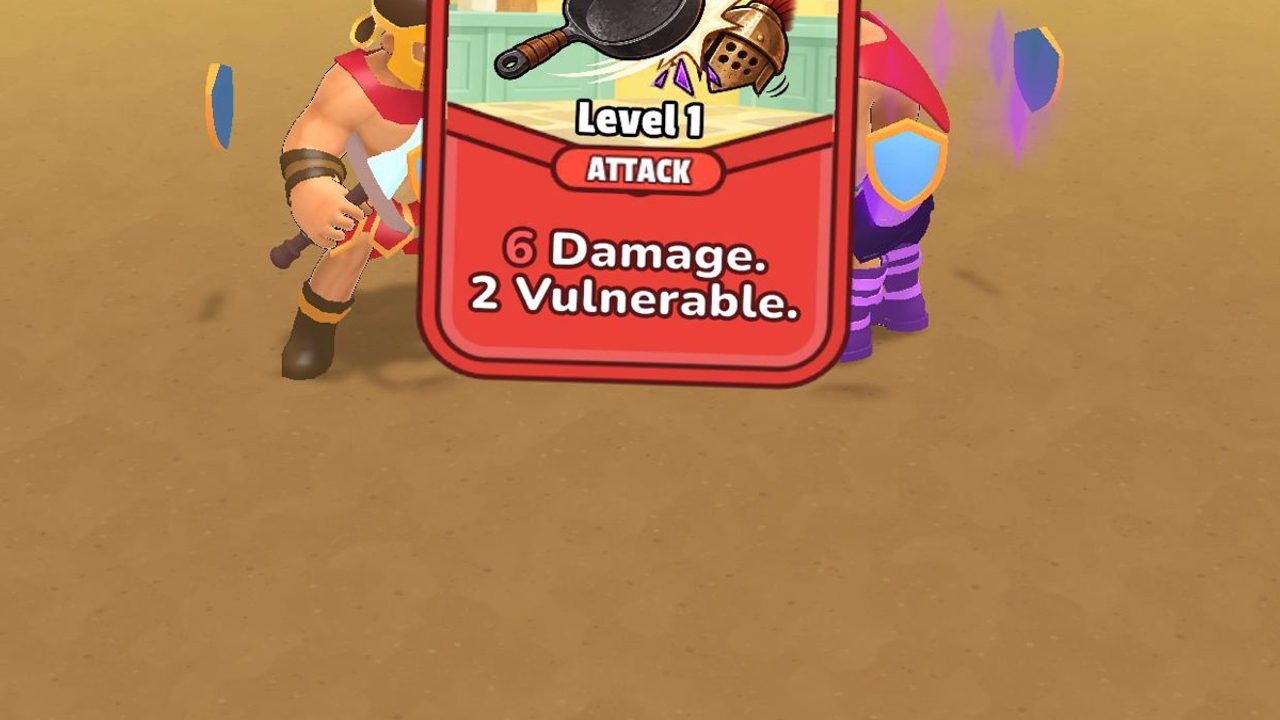
These starter decks for Ragdoll Gladiator Arena use only confirmed early cards: Sword Slash (4 Damage), Guard Up (6 Block), Double Chop (2×3 Damage), and Pan Slap (6 Damage + 2 Vulnerable at level 1). Exact copy counts will vary with your unlocks — treat each section as an archetype blueprint, not a locked 30-card export code. The meta is young (v1.2); rebuild when new cards appear or when Updates change numbers.
Learn the turn loop in Getting Started and Arena Combat before blaming a list. Tier context sits on Card Tiers.
Shared building rules
- Every list must function inside three action points per turn.
- Keep at least one plan for hearts (Damage) and one plan for survival (Block) unless you accept glass-cannon risk.
- Pan Slap is your Vulnerable engine until another applicator exists.
- Cut cards that do not appear in your ideal three-card turn.
- Test on Lionstone’s 0/330 track before staking long Ironclaw sessions (0/1260).
Archetype 1 — Aggro Slash
Goal: reduce hearts fast with Sword Slash and Double Chop, using Pan Slap as reach plus Vulnerable, and keeping Guard Up minimal.
Core turns:
- Slash → Chop → Slash (pure pressure when Block is low)
- Pan Slap → Slash → Chop (Vulnerable then convert)
- Slash → Pan Slap → End Turn (set up if the third card is weak)
Guard Up policy: carry enough to not die to a single Pan Slap punish, not enough to become a Control deck.
Strengths: short games, strong on Lionstone while opponents mis-sequence Block, clear decision tree.
Weaknesses: runs into stacked Guard Up; punishes miscounted lethals; Ironclaw opponents punish empty defense.
Playstyle deep dive: Aggro.
Climb tip: if you lose two matches to Block walls, add one more defensive beat or switch to Vuln-pan for a set — do not tilt-queue the same brick.
Archetype 2 — Control Block
Goal: stabilize with Guard Up, then win through efficient Slash damage and opportunistic Pan Slap punishes when the opponent overextends.
Core turns:
- Guard Up → Guard Up → Slash (buy time, chip)
- Guard Up → Pan Slap → Slash (survive and plant Vulnerable)
- Pan Slap → Slash → Guard Up (tempo hybrid when hearts allow)
Chop policy: keep Double Chop for finishing leftover hearts after long Block wars; do not flood the list if you never see Vulnerable.
Strengths: Bronze League consistency, better Ironclaw survival, forgives some sequencing mistakes.
Weaknesses: can flood out; loses to relentless Vulnerable if you never punish; slower trophy rate when you over-block.
Playstyle deep dive: Control.
Climb tip: track the season timer on Bronze League (Ranks). Control shines in long sessions where variance averages out.
Archetype 3 — Vuln-Pan
Goal: center the deck on Pan Slap. Every plan either applies Vulnerable or cashes it with Slash/Chop, using Guard Up as the bridge on scary turns.
Core turns:
- Pan Slap → Slash → Chop
- Pan Slap → Guard Up → Slash
- Guard Up → Pan Slap → End Turn (safe setup when burst threatens)
Identity check: if you are not looking for Pan Slap in opening sequences, you are accidentally playing Aggro or Control without committing.
Strengths: strongest unique effect in the known pool; wins medium-length fights; teaches Advanced sequencing early.
Weaknesses: feels awkward if Pan Slap is buried; greedy slap into lethal-on-board situations; depends on following through with Damage.
Related theory: Deck Building and Weapons & Cards.
Climb tip: use the Tools checklist to count Vulnerable stacks every turn so you do not “forget” why you slapped.
How to choose your first archetype
- New and want short games → Aggro Slash
- New and hate sudden deaths → Control Block
- Comfortable with the orb and want skill expression → Vuln-Pan
- Unsure → play five Lionstone matches of each, then lock one for a Bronze League segment
Tempo players who sit between Aggro and Control can splash ideas from all three; the Players Hub describes that mindset even without a separate Tempo leaf page yet.
Side adjustments (conceptual)
No confirmed sideboard UI is documented here. Adjustments mean rebuilding between matches:
- Into heavy Damage: + Guard Up density
- Into heavy Block: + Pan Slap / Double Chop priority
- Into mirrors: win first Vulnerable; keep a clean lethal Slash ready
What not to do
- Do not invent filler cards to “complete” a netdeck screenshot from another game.
- Do not wait for promo packs that do not exist — Codes shows none verified.
- Do not rebuild after every loss; change one variable at a time.
- Do not ignore ragdoll juice and also ignore hearts — watch hearts first.
Progression path
- Lock an archetype.
- Climb Lionstone while journaling mistakes.
- Read Card Tiers once you own upgrades.
- Adapt for Ironclaw pressure.
- After patches, re-validate Pan Slap and Guard Up priority.
Related links
Pick a lane, master three-point turns inside it, and only then chase fancy new cards as arenas unlock them.
Frequently Asked Questions
Quick answers to the most common questions.
Which starter deck is best for absolute beginners?
Control Block is the most forgiving because Guard Up reduces sudden knockouts while you learn the orb. Aggro is fine if you already track lethal well.
What is the Vuln-pan deck?
It centers on Pan Slap to apply Vulnerable, then converts with Sword Slash and Double Chop while using Guard Up as safety.
Can I mix all three archetypes?
You can splash, but each list needs a primary plan for three-point turns. Too much mixing creates draws that do nothing together.
Are copy counts exact?
No. Unlock order differs. Use the role priorities and example turns, then adjust to the cards you actually own.
When should I change decks?
After a meaningful patch, after unlocking cards that change roles, or after a planned sample of matches—not after a single loss.
Do these decks work on Ironclaw?
Yes as starting points, but expect to raise Guard Up density and sequencing quality on the longer 0/1260 trophy track.