Ragdoll Gladiator Arena Arena Combat Guide
Master turn timing, defensive math, and knockouts while the ragdolls fly.
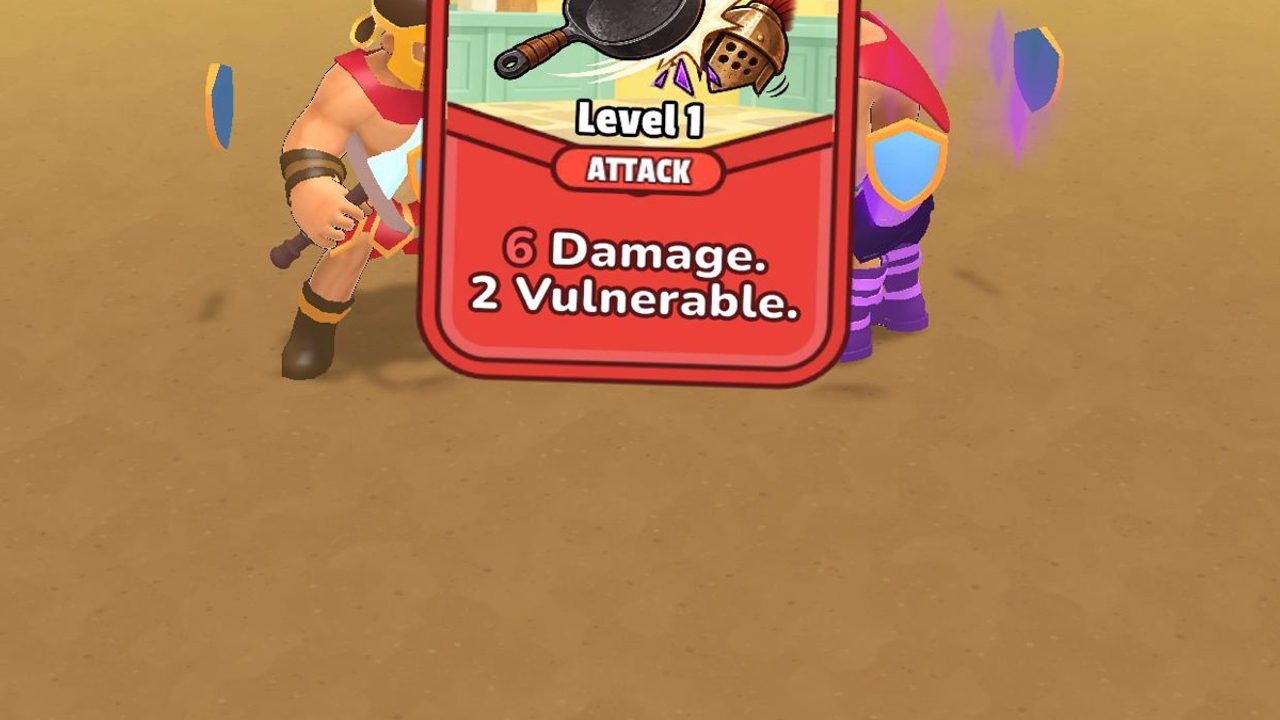
Arena combat in Ragdoll Gladiator Arena is a turn-based card fight wrapped in ragdoll physics. You spend up to three action points per turn, play cards, press End Turn, then sit through Opponent’s Turn. Hearts represent health. Block absorbs damage. Vulnerable amplifies upcoming hits. This guide explains how to win the fight on the numbers while the frying pans and hammers sell the show.
New players should skim Getting Started first. Deck construction details live in Deck Building.
The turn loop in detail
- Your Turn begins — the blue orb shows plays available, starting at 3/3 in a full turn.
- Play cards — each play reduces the orb (2/3, 1/3, 0/3).
- Optional early End Turn — you may stop before 0/3 if your line is complete.
- End Turn — you commit; unused plays do not become free interrupts during the opponent’s resolution.
- Opponent’s Turn — they receive their own three-point budget.
- Resolution and ragdolls — animations play; hearts update after Block.
- Repeat until a gladiator is knocked out.
Clarity beats speed. The client is readable: orb, hearts, Block, Vulnerable, End Turn. If you cannot see Vulnerable stacks, pause and check the fighter UI before spending the next point.
When to End Turn
End Turn when one of these is true:
- You have lethal through expected Block.
- You have set Vulnerable and lack a profitable third play.
- You need to lock in Guard Up before a scary opponent hand.
- Your remaining cards are blanks for this board state.
Do not End Turn solely because the ragdoll idle animation looks done. Do not hold forever at 1/3 hoping a better option appears — the hand is already there.
Aggressive players often End Turn immediately after a Pan Slap plus Slash if the third card is a weak Guard Up they would rather draw later. Control players often End Turn after double Guard setup even if a Chop remains, preferring hearts over greed. Both lines are valid; random End Turns are not. See Aggro and Control for mindset.
Reading Block
Guard Up grants 6 Block on the confirmed early card. Block sits between Damage and hearts. Practical reading tips:
- Compare your total planned Damage this turn to visible Block.
- If Damage is less than or equal to Block, you are probing or setting Vulnerable, not scoring hearts.
- Split hits from Double Chop (2×3) can behave differently than a single 6 against partial Block leftovers — watch the heart pipeline after each instance.
- Over-blocking is real: banking 6 Block against a hand that only threatens 4 wastes an action point you could have spent on Sword Slash.
Track Block on both fighters using the habits listed on the Tools Hub.
Reading Vulnerable
Pan Slap at level 1 deals 6 Damage and applies 2 Vulnerable. Vulnerable is your permission slip to win longer fights. Guidelines:
- Apply Vulnerable when you expect at least one more damage card this turn or next.
- Avoid spending your only point on Vulnerable if you are dead to the opponent’s unchecked burst and hold a Guard Up instead.
- Into heavy Block, Vulnerable plus multi-hit tools often beats raw single swings.
Future cards may add more Vulnerable or unique debuffs. Until they are confirmed, do not assume stack caps or diminishing returns beyond what the client shows.
Knockouts and lethal math
A knockout happens when hearts reach zero after Damage clears Block. Before you tap End Turn on a supposed lethal:
- Count remaining hearts.
- Subtract remaining Block.
- Add expected Vulnerable-adjusted Damage from cards you will still play.
- Confirm you have enough action points left to play those cards.
- Only then commit.
Miscounting points is the most common “I had lethal” mistake. The orb does not lie — 0/3 means you needed to sequence earlier.
Ragdoll physics quirks (presentation vs rules)
Official screenshots show fighters bouncing and tumbling when hit. Weapons include frying pans, hammers, and swords. That presentation can mislead:
- A huge tumble does not mean bonus Damage beyond the card text.
- A tiny stumble can still represent a full Sword Slash of 4 Damage.
- Physics flair is feedback, not a hidden RNG damage roller for the card values themselves.
Play the numbers. Enjoy the ragdolls as juice. If an animation ever desyncs from heart updates, trust the hearts and restart the app only if the UI freezes — then report through normal App Store channels, not random “fix” downloads.
Arena context during combat
Lionstone Arena (Arena 1, trophy track 0/330) is where you learn clean sequencing. Ironclaw Arena (Arena 4, 0/1260) raises stakes and opponent consistency. Bronze League overlays add season timers and star ratings beside names, but they do not change the three-point rule. Rank climbing strategy is separate — see Ranks — yet combat fundamentals stay the same.
Warrior Prize countdowns may run while you fight. Claim rewards between matches; do not rush End Turn just to chase a timer if it costs the game.
Mid-match decision tree
Use this quick tree (also summarized on Tools):
- Am I dead next turn if I tap lightly? → Guard Up first.
- Is the opponent in lethal range now? → Sequence Damage; Pan Slap only if it still fits lethal or guarantees next-turn lethal.
- Is the board stalled? → Invest in Vulnerable, then End Turn safely.
- Did I brick? → End Turn after the least-bad play; do not burn points into empty Block against no threat.
Practice drills
- Play a match where you say the orb count aloud before every card.
- Play a match where you refuse to End Turn until you state Block and hearts for both sides.
- Play a match focused only on landing Pan Slap Vulnerable before any big Chop.
- Review losses: was it deck construction (Deck Building) or sequencing?
Related reading
- Card identities: Weapons & Cards
- Strength snapshot: Card Tiers
- Example lists: Best Decks
- Patch changes to combat: Updates
- Promo myths: Codes
Master the loop — three points, End Turn, Opponent’s Turn — and the ragdoll chaos becomes entertainment instead of distraction.
Frequently Asked Questions
Quick answers to the most common questions.
What does the blue orb show?
It shows how many card plays you have left this turn, such as 1/3 or 0/3, out of the three action points granted each turn.
Can I pass without spending all three points?
Yes. Press End Turn whenever your line is complete. Unused points do not let you interrupt during Opponent’s Turn.
How does Block work with Guard Up?
Guard Up provides 6 Block on the confirmed early card. Incoming Damage hits Block before hearts. Plan Damage totals against visible Block.
What does Vulnerable do for Pan Slap?
Pan Slap at level 1 deals 6 Damage and applies 2 Vulnerable, improving the payoff of follow-up damage in the fight.
Do ragdoll animations change damage?
Treat animations as presentation. Card text and heart/Block UI determine the result, not how far a fighter tumbles.
Does Bronze League change combat rules?
Season timers and stars affect ranking context, not the three action points or End Turn structure. Combat rules stay consistent across Lionstone and Ironclaw.