Ragdoll Gladiator Arena Aggro Playstyle
End games before Guard Up wars begin — pressure lines for the three-point turn.
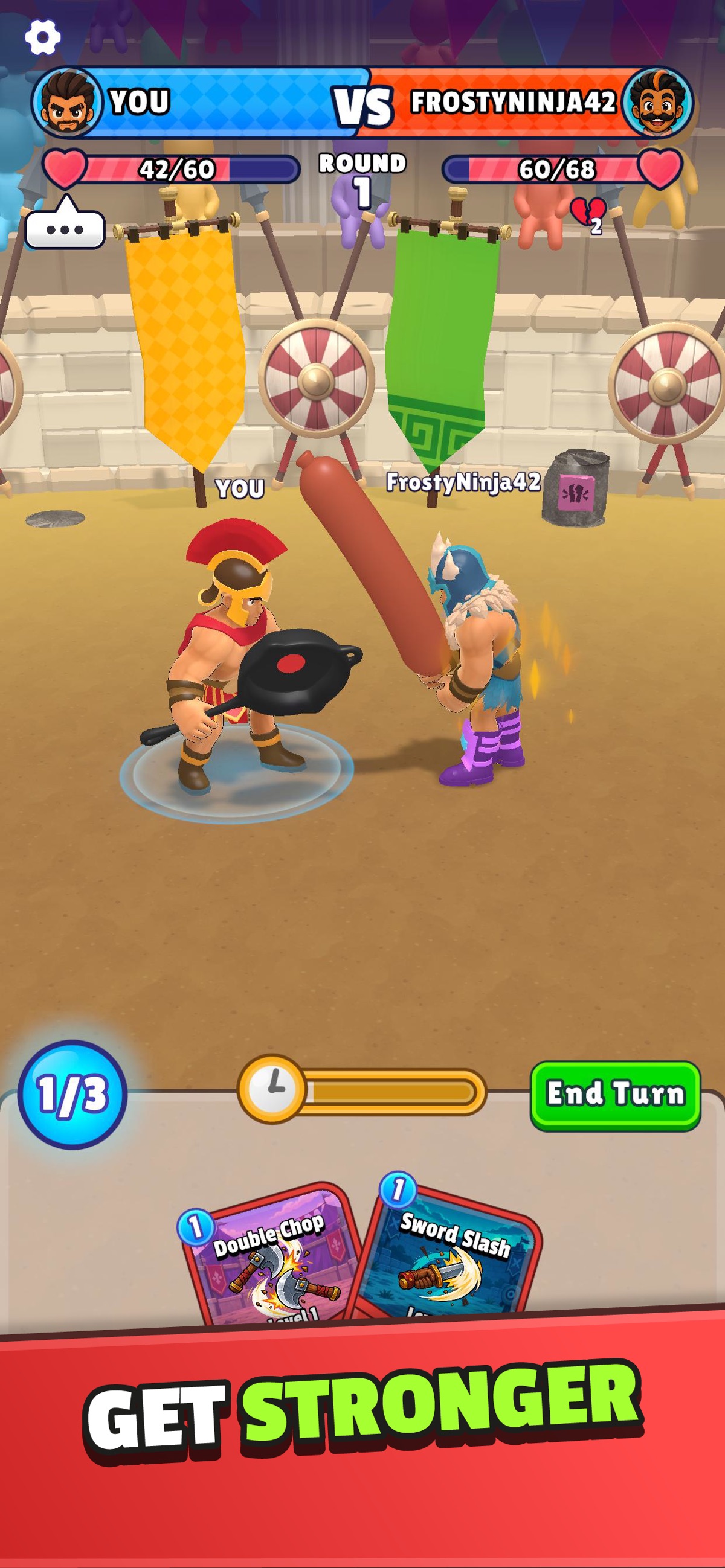
Aggro in Ragdoll Gladiator Arena means spending your three action points to erase hearts as early as possible. You are not trying to win a twenty-turn Block essay. You want Sword Slash and Double Chop on the board, Pan Slap when it finishes or plants Vulnerable for the final swing, and just enough Guard Up to survive one scare. This guide assumes version 1.2 knowledge of the confirmed early cards only.
If you still need UI basics, read Getting Started. For contrast, skim Control. List blueprints sit on Best Decks.
Aggro priorities
- Count lethal every turn — hearts minus Block plus your Damage sequence.
- Prefer Damage that fits the orb — do not draft fantasy four-card combos.
- Use Pan Slap as reach — 6 Damage + 2 Vulnerable at level 1 closes games Control thinks are stable.
- Respect burst coming back — light Guard Up prevents embarrassing reverse sweeps.
- End Turn decisively — hesitation is how Control decks breathe.
Core cards for Aggro
Sword Slash (4 Damage)
Your default point spend. Always available as a “does something” play. Aggro decks fail when they replace too many Slashes with cute situational tools.
Double Chop (2×3 Damage)
Closer and leftover specialist. When Vulnerable is up, both hits matter. Learn to see 3+3 through partial Block instead of only thinking in sixes.
Pan Slap (6 Damage + 2 Vulnerable)
Your power card. Aggro players sometimes underrate Vulnerable because they want instant kills. Planting 2 Vulnerable then converting next turn is still Aggro if the clock stays short.
Guard Up (6 Block)
Insurance. Not your identity. If Guard Up is your most clicked card, you drifted into Control — revisit the Players Hub.
Example Aggro turns
- Pure pressure: Slash → Chop → Slash
- Reach: Pan Slap → Slash → Chop
- Safe jab: Slash → Slash → End Turn (when third card is a brick Guard you would rather hold)
- Emergency: Guard Up → Pan Slap → Slash (only when hearts demand it)
Say the line before you tap. Aggro dies to autopilot more than to “bad matchmaking.”
Mulligan and opening philosophy
When the game allows choices over openers, keep hands with early Damage. A hand of only Guard Up is a Control hand — consider reshaping if the client offers redraw options. On the play, default to chip. On the draw, consider whether a light Block beat is required before you empty the tank.
Matchup notes
Into Control
They will Guard Up. Your job is Vulnerable first, then split damage. Pan Slap becomes mandatory. Avoid tapping three raw Slashes into fresh 6 Block with no plan. See Deck Building for role talk.
Into Aggro mirrors
Race math. Sometimes the correct Aggro play is a single Guard Up because both decks are glass. Whoever ignores hearts first loses the mirror.
Into Tempo / Vuln-pan
They also want Pan Slap. Winning first Vulnerable matters; stealing the slap race is allowed. If you lose first Vulnerable, you may need a defensive beat before re-pressuring.
Arena climbing as Aggro
Lionstone (0/330) is fertile ground: short sessions, quicker feedback. Ironclaw (0/1260) exposes empty Block. Raise your Guard Up floor slightly when stars matter in Bronze League near season end (Ranks). Do not abandon Aggro entirely — tighten sequencing instead.
Warrior Prize timers can tempt rushed queues. Finish the match you are in; a thrown game costs more than a delayed claim.
Common Aggro mistakes
- Spending all three points into full Block “because Aggro never Blocks.”
- Holding Pan Slap for a perfect turn that never arrives.
- Forgetting Double Chop leftovers and End Turning with lethal on board.
- Tilting into worse lists after one Guard Up wall.
- Chasing fake rank codes (Codes — none verified).
Training plan (one evening)
- Five matches counting lethal aloud before every End Turn.
- Five matches where Pan Slap must be played by turn two if drawn.
- Review losses with Arena Combat — sequencing or deck?
- Compare your results to Control nights to confirm identity fit.
- Check Card Tiers only after the drills, not before.
When to stop playing Aggro
Switch temporarily if:
- You cannot stop overcommitting into Block.
- Ironclaw opponents punish every empty defense.
- You feel bored racing and want longer puzzles (try Tempo notes on the hub or full Control).
Switch permanently only after a planned sample, not after two losses.
Related reading
- Players Hub
- Control Playstyle
- Weapons & Cards
- Tools Hub for AP/Block/Vuln tracking
- Updates for balance shifts
- Official Links
Aggro is a promise: every action point should threaten the clock. Keep that promise and the frying-pan highlight reels become victory laps instead of moral wins in losing games.
Frequently Asked Questions
Quick answers to the most common questions.
What makes a deck Aggro in this game?
High Damage density from Sword Slash and Double Chop, Pan Slap for reach and Vulnerable, and only light Guard Up for emergencies.
Should Aggro ever play Guard Up?
Yes, in small amounts. Surviving one burst keeps your race alive. If Guard Up dominates your clicks, you are no longer on Aggro.
How do I beat Control as Aggro?
Apply Vulnerable with Pan Slap, then use split damage from Double Chop and efficient Slashes instead of tapping blindly into fresh Block.
Is Aggro good on Ironclaw?
It can be, but you usually need cleaner sequencing and a slightly higher defense floor than on Lionstone’s shorter track.
What is the biggest Aggro mistake?
Ending Turn without checking lethal, or dumping all three points into Blocked targets with no Vulnerable plan.
Where can I find an Aggro starter list?
See the Aggro slash archetype on the Best Decks page, then refine using this playstyle guide.