Ragdoll Gladiator Arena Control Playstyle
Stabilize with Block, punish greed, and win the long Bronze League session.
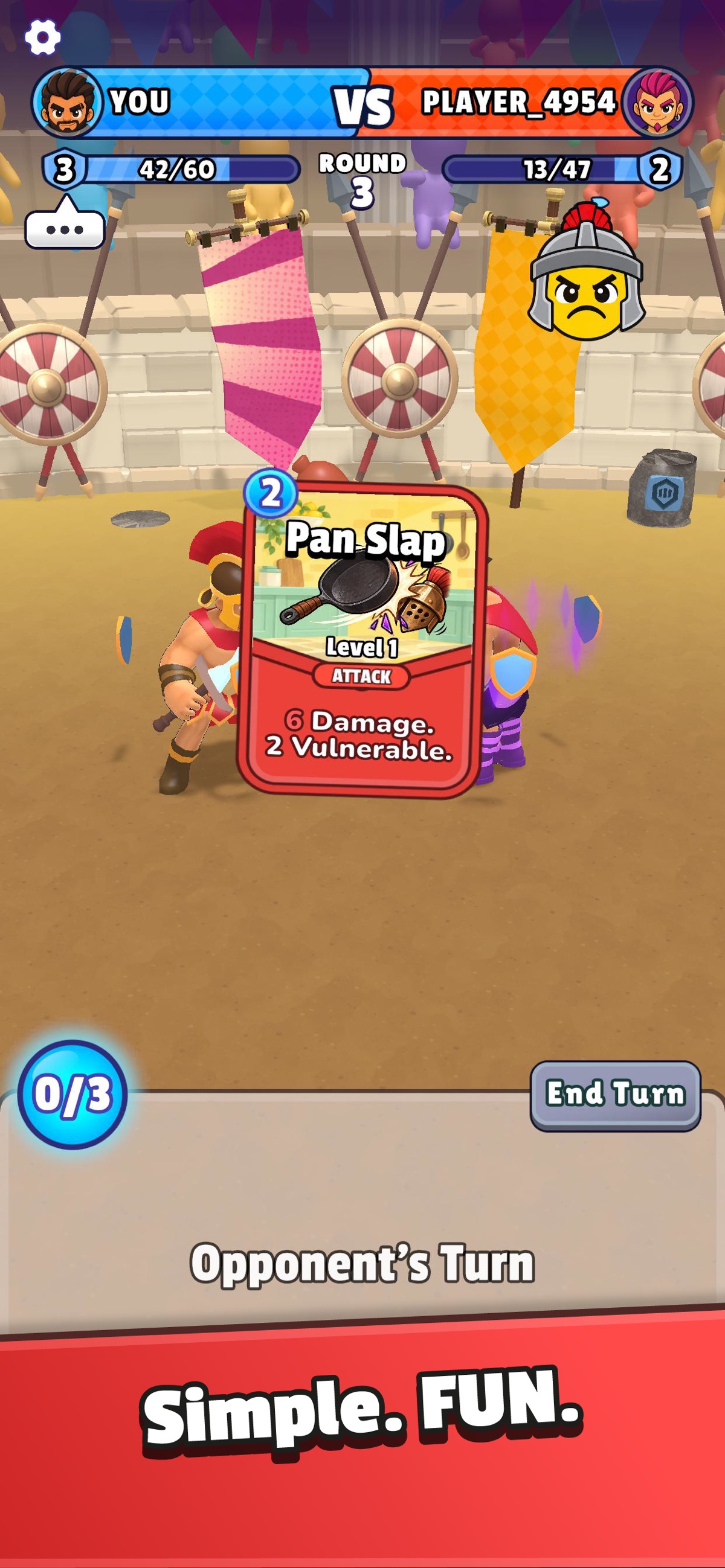
Control in Ragdoll Gladiator Arena is the art of spending three action points so you still have hearts tomorrow. Your banner card is Guard Up (6 Block). You win by surviving Aggro openers, answering Pan Slap greed, and converting with Sword Slash or Double Chop once the opponent is out of gas. This is not “doing nothing.” Clean Control turns are deliberate: Block when necessary, Vulnerable when safe, Damage when it changes the race.
Baseline UI and turn rules are in Getting Started and Arena Combat. Aggro contrast: Aggro. Recipe shape: Control block on Best Decks.
Control priorities
- Know your death number — how much Damage you die to after Block.
- Spend Guard Up against real threats, not as a nervous tic.
- Punish overextensions with Pan Slap when they empty their orb into your Block.
- Keep a finisher plan — Slash/Chop must appear before the match times out in your head.
- End Turn with a reason — usually “I am safe” or “I planted Vulnerable.”
Core cards for Control
Guard Up (6 Block)
Identity. You will click this more than Aggro pilots. Still ask each time: does this Block save hearts that matter?
Sword Slash (4 Damage)
Your fair converter. Control without Slash becomes pure stall and eventually loses to Vulnerable engines.
Pan Slap (6 Damage + 2 Vulnerable)
Punish and breakthrough tool. Control Pan Slap often appears after a Guard Up turn, not always on turn one.
Double Chop (2×3 Damage)
Finishes leftover hearts after long wars. Excellent when Vulnerable finally sticks.
Example Control turns
- Stabilize: Guard Up → Guard Up → Slash
- Stabilize and seed: Guard Up → Pan Slap → End Turn
- Punish: Pan Slap → Slash → Guard Up
- Close: Slash → Chop → Slash (only when the race is actually over)
If every turn is double Guard with no Damage, you are stalling, not controlling. Stall loses to patients who also run Pan Slap.
Opening philosophy
On the draw against unknown opponents, early Guard Up is reasonable. On the play with a Damage-heavy hand, a light chip into later Block is fine. Control is allowed to take hearts early — it simply refuses to race blind.
When openers are all Damage and zero Block, note the risk. You may need to play a hybrid Tempo line for a turn (see Tempo notes on the Players Hub) until you draw Guard Up.
Matchup notes
Into Aggro
This is your “why Control exists” matchup. Block their Slash/Chop turns, survive Pan Slap reach, then win the longer game. Do not greed Lethal attempts while you are still in their burn range. Track stacks with habits from Tools.
Into Control mirrors
Someone must break first. Pan Slap Vulnerable becomes the resource war. Over-blocking forever draws the match toward whoever finds the first efficient convert. Slight Tempo instincts help.
Into Vuln-pan / Tempo
They want first Vulnerable. Sometimes you Guard Up into their slap turn on purpose, then slap back. Sometimes you race the Vulnerable if your hearts are healthy. Reading which branch you are in is the skill.
Climbing as Control
Control thrives in longer samples: Bronze League evenings, Ironclaw’s 0/1260 marathon, seasons where you care about stars more than highlight reels (Ranks). Lionstone’s 0/330 still teaches you — use it to practice “Block only when needed.”
Near season timers, Control’s lower variance is an advantage. Do not invent last-second Aggro rebuilds unless your list is clearly wrong for the field.
Warrior Prize countdowns are side content. A panicked End Turn to go claim a prize is how Control players donate games.
Common Control mistakes
- Blocking on zero threat while the opponent is already at two hearts.
- Never playing Pan Slap because “Control doesn’t slap.”
- Flooding Guard Up until you cannot assemble a three-point Damage turn.
- Tilting into pure Aggro after one loss without a plan.
- Believing promo codes will grant better walls — Codes shows none verified.
Training plan (one evening)
- Five matches where you must state the threat number before each Guard Up.
- Five matches forcing at least one Pan Slap punish when the opponent whiffs into Block.
- Review whether losses were sequencing or missing finishers (Deck Building).
- Compare trophy rate to your Aggro nights.
- Recheck Card Tiers after patches only.
When Control is the wrong tool
If you consistently boredom-queue and make soft End Turns, you may enjoy Aggro more. If you love first-Vulnerable puzzles but hate double Block turns, play Tempo-leaning Vuln-pan instead of full Control. Identity is allowed to change between weeks — just change on purpose.
Related reading
Control wins when hearts remain and plans stay intact. Let the ragdolls tumble on the opponent’s turn while your Block number quietly does its job.
Frequently Asked Questions
Quick answers to the most common questions.
What is the key Control card?
Guard Up with 6 Block is the identity piece. Pan Slap and Sword Slash still matter for winning after you stabilize.
Is Control just stalling?
No. Real Control turns decide whether Block is needed, then convert with Damage or Vulnerable. Pure stall without finishers eventually loses.
How do I punish Aggro?
Absorb their three-point bursts with Guard Up, then Pan Slap when they overcommit and convert with Slash or Double Chop.
Does Control work on Lionstone or only later arenas?
It works everywhere. Lionstone is great practice for disciplined Blocking; Ironclaw rewards the consistency even more.
When should I stop Blocking?
When the opponent cannot kill you and you have lethal or a stronger Vulnerable setup available on the orb.
Where is a Control starter deck?
Use the Control block archetype on Best Decks, then refine with the priorities on this page.